Every year, as the shops fill with plastic pumpkins and “spooky specials,” I cringe a little. Not because I dislike celebration, but because we in the Southern Hemisphere seem to keep blindly following Northern Hemisphere traditions that don’t match our land, our seasons, or our truth.
And it doesn’t stop at Halloween. Come November, the tinsel creeps in, plastic trees sprout in shopping centres, and the pressure to buy—more, bigger, shinier—reaches fever pitch. Easter brings its own avalanche of foil-wrapped sugar and pastel packaging, all wrapped in a narrative of renewal that feels hollow when it’s driven by marketing calendars rather than meaning. These holidays, once rooted in community, nature, and reflection, have been hijacked by consumerism. We’re sold nostalgia and belonging, but what we’re really buying is landfill.
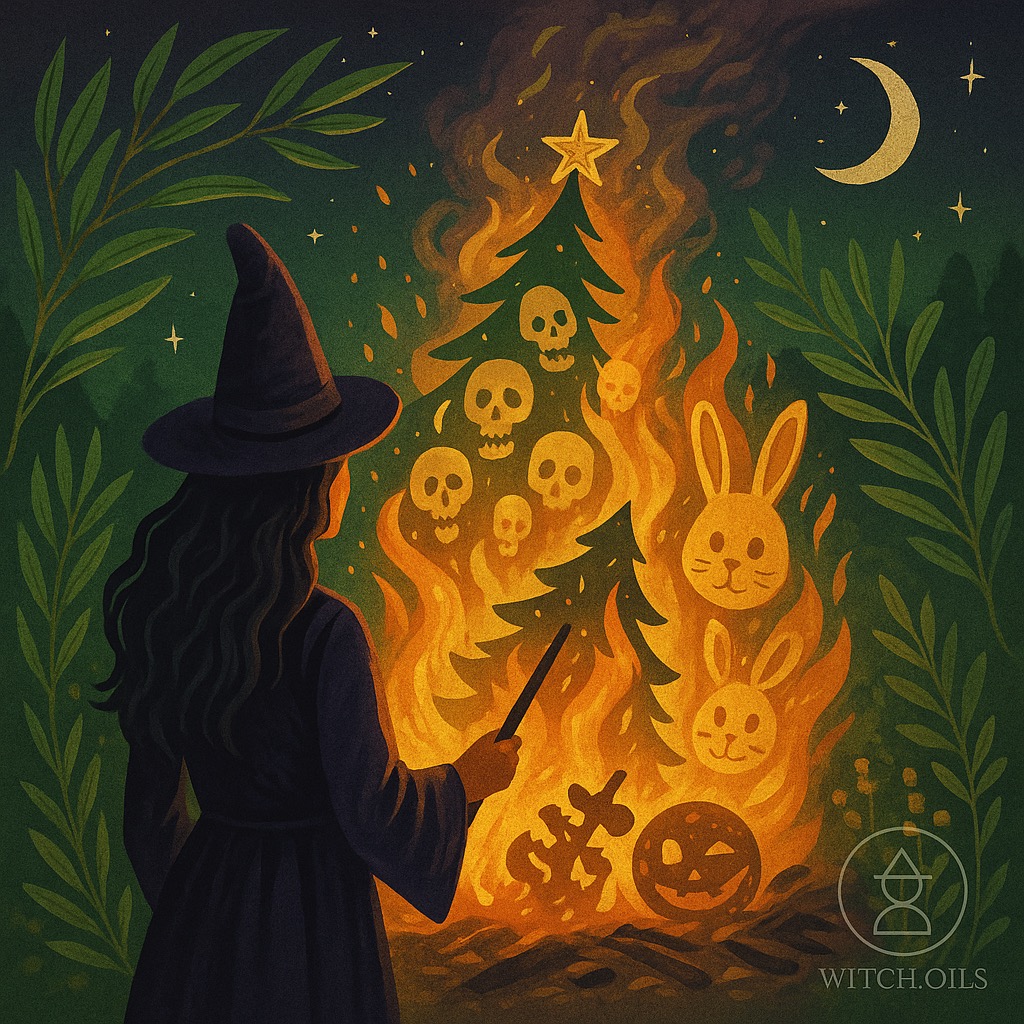
It’s time to honour our own seasonal rhythm. To step away from token “Halloween in Spring” or “Yule in Summer” contradictions, and instead attune ourselves to the cycles of Mother Earth right beneath our feet here in Australia.
🌍The Problem with Imported Festivals
Easter – a festival of fertility and rebirth, aligned with spring in Europe. Here in Queensland, Easter falls in autumn. Seasonally, our Easter should be celebrated around September at the Spring Equinox
Christmas / Yule – Yuletide blessings are a winter tradition, not suited to sweltering December heat. Yet we burn fake snow candles and hang pine cones while wiping sweat from our brows. Celebrations for this season is the Winter Solstice in June.
Halloween / All Hallowed Eve / All Saints Day – Traditionally, this is a time to honour the dead, when the veil between worlds is said to be thinnest. In the Northern Hemisphere, it marks the end of harvest and the descent into winter—a natural time for reflection, remembrance, and ancestral reverence. But here in Australia, October is a time of growth and blooming, not decay. The true energetic mirror of this sacred time is in late April to early May, as we move into the darker half of the year. For witches, this is a powerful time to connect with spirit, honour lineage, and walk between worlds—but only when we align with our own seasonal truth.
Other Traditions – Wiccan, Pagan, Christian, Hindu… many of these traditions are tied to the land where they were born. For example, Holi is a spring festival in India. Here, it lands in autumn. The seasonal symbolism gets lost in translation when we ignore our own cycles.
This isn’t about abandoning tradition. It’s about being authentic to our place.
Honouring First Nations Wisdom – Long before imported festivals arrived on these shores, the First Nations peoples of Australia lived in deep relationship with the land, guided by intricate seasonal calendars that varied by region and Country. These cycles were not just about weather, but about the movement of animals, flowering of plants, and the rhythms of life. As we seek to reconnect with our own seasonal truth, we do so with deep respect for the custodians of this land, whose knowledge systems have honoured these cycles for tens of thousands of years.
Southern Hemisphere Sabbats 🌏
Here, South of the equator, the Wheel of the Year turns opposite to that of the north. To stay true to the land beneath our feet, we realign the sabbats six months from their European origins. These eight seasonal points — the solstices, equinoxes, and cross-quarter festivals — trace the cycle of birth, growth, harvest, and rest.
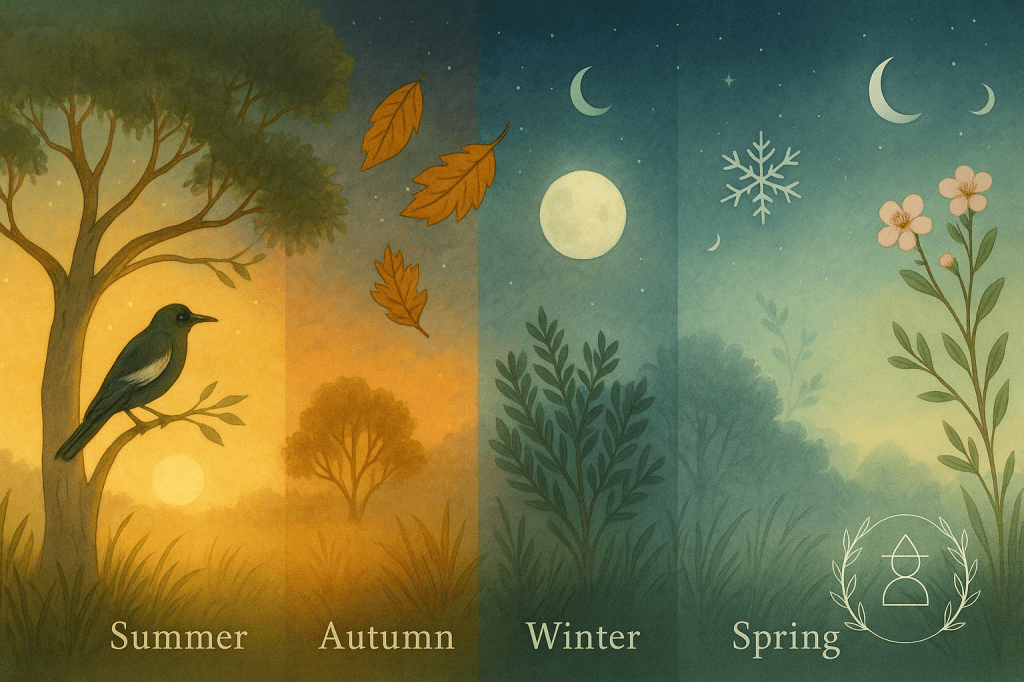
Each sabbat carries echoes across cultures: ancient fire festivals, harvest feasts, and solstice celebrations appear in almost every civilisation. Whether known as Easter, Christmas, May Day, or Halloween, they all stem from humanity’s shared desire to honour the rhythms of light and life. By observing them in our correct southern timing, we connect to the same universal spirit — only through the lens of our own sky and soil.
- Lammas / Lughnasadh – 1–2 February (First Harvest Festival)
The first harvest and celebration of abundance, gratitude, and nourishment. - Mabon (Autumn Equinox) – 20–23 March
A time of balance and thanksgiving as day and night stand equal. - Samhain (Halloween / All Hallows Eve) – 30 April–1 May
The end of harvest and the beginning of the dark half of the year; a sacred time to honour ancestors and the unseen. - Yule (Winter Solstice / Christmas) – 20–22 June
The longest night, when the returning light is reborn — a celebration of hope and renewal. - Imbolc (Candlemas) – 1–2 August
The first stirrings of spring; time to cleanse, prepare, and welcome new beginnings. - Ostara (Spring Equinox / Easter) – 20–23 September
Fertility, balance, and blooming life — the world awakens in full colour. - Beltane (May Day) – 31 October–1 November
The height of passion, creativity, and life’s full expression; a time for union and vitality. - Litha (Summer Solstice / Midsummer) – 21–22 December
The sun stands highest; a celebration of light, growth, and gratitude for life’s fullness.
Together, these eight sabbats form the Wheel of the Year — a sacred calendar that reconnects us to the living Earth. When we celebrate in rhythm with our own seasons, our rituals become not just symbolic, but truly embodied in the land that sustains us.
As the Earth turns through her sabbats, the Moon mirrors her rhythm above. Each full moon carries its own energy and story, guiding us through cycles of intention, reflection, and renewal. Just as the sabbats mark the great seasonal tides of the year, the moons mark the smaller waves within each month — helping us stay attuned to both the vast and the intimate movements of nature.
Southern Hemisphere Moon Names 🌕
The moon was the original calendar. Names for each full moon came from seasonal markers – harvest, storms, animals, planting, and rest. But those names were tied to northern lands. For us in the south, they need flipping too.
- January – Blessing Moon
- February – Corn Moon
- March – Harvest Moon
- April – Blood Moon
- May – Mourning Moon
- June – Long Nights Moon (Winter Solstice)
- July – Cold Moon
- August – Storm Moon
- September – Crow/Worm Moon (Spring Equinox)
- October – Seed Moon
- November – Flower Moon
- December – Strong Sun Moon (Summer Solstice)
These moon names are adapted for the Southern Hemisphere, inspired by traditional seasonal markers but realigned to reflect our local cycles.
🌕 A Note on Moon Names and First Nations Knowledge
Across Australia, First Nations peoples have long followed the rhythms of the moon—not just for marking time, but for guiding ceremony, harvesting, hunting, and storytelling. These lunar cycles are deeply embedded in Country and vary from region to region. Some communities recognise 12 moons, others 13, and the names reflect what is happening in the land—like the blooming of a flower, the migration of birds, or the ripening of bush foods.
Out of respect for the cultural and intellectual property of these communities, I do not attempt to replicate or rename these moons here. Instead, I acknowledge the depth of this knowledge and encourage you to explore the seasonal calendars created in partnership with Traditional Owners through organisations like CSIRO.
As we reconnect with the land beneath our feet, may we do so with humility, curiosity, and reverence for the wisdom that has always been here.
Why It Matters 🌿
When we celebrate on Northern schedules, we disconnect from the Earth beneath us. We become consumers of someone else’s story.
But when we align with Gaia here in the Southern Hemisphere, something shifts:
Our rituals become more powerful. Our intentions become more relevant. Our practice becomes more authentic.
So this October, while the shops shout “Halloween!”, I invite you to honour the Seed Moon. Plant something new – in your garden, in your heart, in your life. That is the true seasonal magic of now.
✨ Be true to the land you walk upon. Honour her seasons. Listen to her cycles. That’s the Witch Oils way.
 Witch Oils
Leave a comment